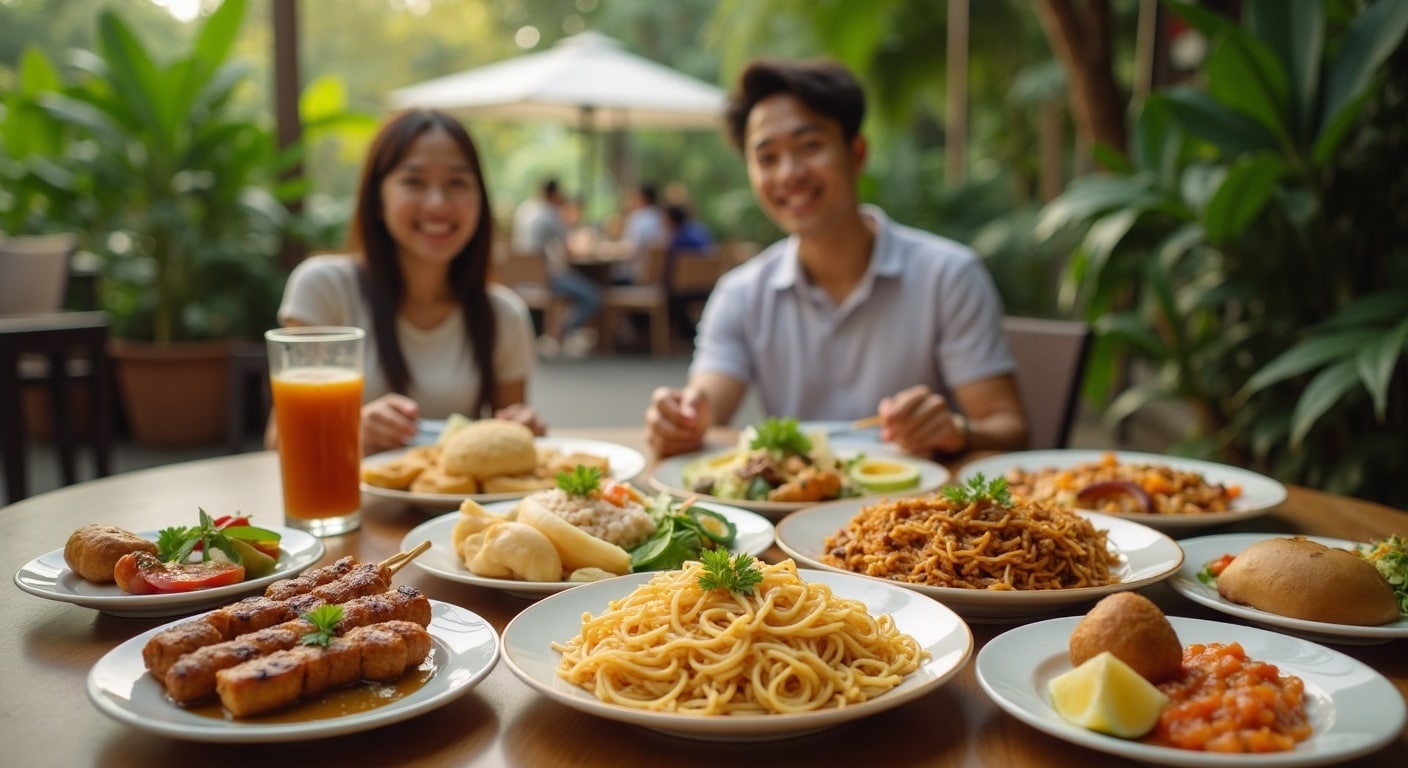
Malaysia is one of Southeast Asia’s most exciting destinations for eating, and this malaysia food guide is designed to help first-time visitors navigate it with confidence. From smoky street-side satay to fragrant nasi lemak, chewy char kway teow, banana leaf rice, and refreshing cendol, the country’s food reflects Malay, Chinese, Indian, Peranakan, Indigenous, and regional influences in one rich dining culture.
For many travellers, the biggest challenge is not finding good food, but deciding where to begin. Menus can be unfamiliar, local food courts can feel overwhelming, and regional differences between Kuala Lumpur, Penang, Melaka, Johor, Sabah, and Sarawak can be confusing at first. The good news is that eating well in Malaysia does not require a luxury budget or expert knowledge. What it does require is a little context.
This guide covers what first-time visitors should know, what dishes to prioritise, where to eat, how to order, what mistakes to avoid, and how to enjoy Malaysian food respectfully and affordably. If you are planning a wider trip, you can also pair your food itinerary with practical ideas from budget travel in Malaysia to make the most of your stay.
Why Malaysian food stands out for first-time visitors
Malaysian food is special because it is not built around one single cuisine. Instead, it is a living mix of traditions shaped by migration, trade, religion, geography, and local adaptation. A first-time visitor can have nasi lemak for breakfast, roast duck noodles for lunch, banana leaf rice for dinner, and teh tarik at midnight without repeating the same flavour profile.
One of the easiest ways to understand Malaysia’s food culture is to compare it with a multicultural playlist. Each influence keeps its own identity, but together they create something recognisably Malaysian. Malay cooking often brings sambal, coconut milk, lemongrass, and turmeric. Chinese Malaysian food may focus on noodles, wok cooking, and broths. Indian Malaysian dishes often highlight spices, curries, breads, and rice meals. Peranakan food combines Chinese techniques with Malay ingredients and bold aromatics.
For visitors, this diversity means there is usually something for every comfort level. If you love spicy food, there is plenty to explore. If you prefer mild dishes, there are also soups, roasted meats, steamed snacks, porridges, and simple rice sets. Malaysia is beginner-friendly because many great meals are available in hawker centres, kopitiams, food courts, and mamak restaurants at relatively affordable prices.
It also helps that eating is central to daily life. Locals often talk about food before, during, and after a meal. That enthusiasm makes the experience welcoming, especially if you are willing to ask what people recommend.
How to understand Malaysia’s food culture before you order
Before jumping into a long must-eat list, it helps to know how food works in everyday Malaysian life. Meals are often flexible rather than formal. Breakfast can be light or heavy. Tea breaks matter. Late-night eating is normal in many urban areas. Sharing dishes is common, but solo meals are just as easy to find.
A useful scenario for first-time visitors is this: you walk into a busy food court and see dozens of stalls selling rice, noodles, drinks, snacks, and desserts. Instead of expecting one menu, think of it as a mini food ecosystem. You may order one dish from a noodle stall, a drink from another vendor, and dessert from a third. In some places, drinks are taken at the table by roaming staff. In others, you order directly at each counter.
Food culture is also shaped by religion and community norms. Halal dining is widely available, especially in Malay restaurants, mamak eateries, and many chains. Chinese coffee shops and hawker stalls may or may not be halal, while Indian restaurants can be halal or non-halal depending on the establishment. This matters for visitors travelling in mixed groups.
Timing affects quality too. Some dishes are best early in the morning, such as nasi lemak or curry puffs, while char kway teow often shines during lunch or dinner at busy stalls. If a place has a queue, that is not always a guarantee of quality, but in Malaysia it often signals consistency and local trust.
Must-try Malaysian dishes for beginners
If you only have a short trip, start with the dishes that give you the clearest introduction to the country’s food identity. A good beginner list balances rice, noodles, bread, grilled items, sweets, and drinks.
- Nasi lemak: coconut rice served with sambal, anchovies, peanuts, egg, and often fried chicken or rendang.
- Satay: skewered grilled meat with peanut sauce, cucumber, and ketupat.
- Char kway teow: flat rice noodles stir-fried with soy sauce, egg, bean sprouts, and seafood or lap cheong depending on the stall.
- Roti canai: flaky flatbread usually eaten with dhal or curry.
- Laksa: varies widely by region, from curry laksa to asam laksa.
- Hainanese chicken rice: poached or roasted chicken with fragrant rice and sauces.
- Nasi kandar: rice with a mix of curries and side dishes.
- Banana leaf rice: rice served on banana leaf with vegetables, curries, and optional meat or fish.
- Cendol: shaved ice dessert with coconut milk, palm sugar, and green jelly noodles.
- Teh tarik: pulled milk tea that is sweet, creamy, and iconic.
For a three-day food-first trip, a simple approach is to choose one national staple, one noodle dish, one Indian Malaysian meal, one dessert, and one regional specialty each day. That way you get variety without food fatigue.
A detailed breakdown of Malaysia’s major food traditions
A proper malaysia food guide should go beyond famous dishes and explain the traditions behind them. This makes ordering easier and helps visitors understand why the same country can serve such different flavours from one neighbourhood to another.
Malay food often centres on rice, sambal, coconut, herbs, and slow-cooked dishes. Nasi lemak, rendang, ayam masak merah, and sambal-based dishes are common entry points. The flavour profile can be rich, aromatic, spicy, and slightly sweet.
Chinese Malaysian food is broad and highly regional. You may find Cantonese-style roast meats, Hokkien noodles, yong tau foo, claypot dishes, and noodle soups. In cities like Kuala Lumpur and Ipoh, Chinese food traditions influence breakfast and lunch culture strongly through kopitiams and hawker stalls.
Indian Malaysian food ranges from banana leaf rice and curries to fried snacks, biryani, tandoori, tosai, and roti canai. Mamak food, which often refers to Indian Muslim eateries, is especially important for late-night dining and casual social meals.
Peranakan or Nyonya food blends Chinese heritage with Malay ingredients and spices. Dishes like ayam pongteh, otak-otak, laksa lemak, and kuih offer a bridge between culinary worlds. For visitors interested in food history, Melaka and Penang are especially rewarding. If your trip includes urban exploring, a short food-focused break can fit easily alongside a weekend getaway in KL.
In East Malaysia, Sabah and Sarawak introduce another layer with Indigenous ingredients, unique noodle dishes, and seafood traditions that differ from Peninsular Malaysia. This variety is one reason why a single trip rarely feels enough.
Where first-time visitors should eat in Malaysia
One of the most common beginner questions is simple: where should I actually eat? The answer depends on your comfort level, budget, and what kind of experience you want.
Hawker centres and food courts are ideal for variety. They allow you to sample multiple dishes in one place, compare stalls, and observe what locals are ordering. They are usually casual, affordable, and excellent for trying signature items without overcommitting.
Kopitiams, or traditional coffee shops, are good for breakfast, toast, eggs, noodles, and local drinks. These are often where you find no-frills but memorable meals. Mamak restaurants are another reliable option, especially for roti canai, nasi kandar-style meals, and late-night eating.
Specialist restaurants work best when you already know what dish you want. For example, if you are specifically craving banana leaf rice or fish head curry, a focused restaurant can offer a fuller version of that experience than a mixed food court.
Night markets are enjoyable for snacks, grilled foods, sweet treats, and street food atmosphere. However, they are not always the best place for every signature dish. Think of them as tasting grounds rather than the only source of authentic food.
If you are exploring beyond one city, it helps to align food planning with destination planning. Different states have their own strengths, and guides to top places in Malaysia can help you identify where famous regional dishes are easiest to find.
Regional food differences every visitor should know
Malaysia’s food changes noticeably by region, and first-time visitors often underestimate this. Ordering laksa in Penang is not the same as ordering laksa in Kuala Lumpur. Asking for noodles in Sabah may introduce ingredients or textures you did not see in Johor.
Penang is often associated with hawker culture and punchy flavours. Asam laksa, char kway teow, cendol, and Hokkien mee are common highlights. Melaka is known for Peranakan influences, chicken rice balls, and coconut-heavy sweets. Kuala Lumpur offers strong variety rather than one single signature identity, making it a practical starting point for beginners.
In Ipoh, visitors often look for bean sprout chicken, hor fun, and white coffee. In Johor, Arab and Malay influences can appear through dishes like nasi briyani gam and local seafood. In Kelantan and Terengganu, east coast cuisine may lean sweeter, with strong use of herbs, fish, and coconut milk.
Sabah and Sarawak deserve special mention because they broaden the definition of Malaysian food beyond what many tourists expect. Sarawak laksa, kolo mee, hinava, and fresh seafood can feel like a separate culinary chapter. For travellers, this means it is worth staying open-minded rather than searching only for the most internationally famous dishes.
A helpful tip is to eat local specialties where they originated if possible. A dish in its home region often tastes more balanced, more respected, and more complete.
How to order Malaysian food with confidence
Ordering in Malaysia becomes much easier once you know a few basic patterns. Many first-time visitors hesitate because they are unsure about spice levels, side dishes, payment, or whether they should wait to be seated.
Start by observing the system. At some stalls, you queue and order first. At others, you sit down and staff come to you. In coffee shops, one stall may handle food while another handles drinks. If in doubt, a simple “How do I order?” is completely acceptable.
It also helps to use practical phrases or concepts:
- “Less spicy” if you are cautious with sambal or curry.
- “What is your signature dish?” for quick local guidance.
- “Halal?” if dietary considerations matter.
- “Set” or “add chicken” if customisation is possible.
- “Hot or iced?” for drinks, especially tea and coffee orders.
For example, if you order nasi kandar, the server may ask which proteins and vegetables you want and then pour mixed curry over the rice. If you order roti canai, you may need to choose plain, egg, tissue, or cheese versions. These small decisions shape the meal.
Cash is still useful, though many urban spots accept e-wallets and cards. During peak periods, ordering quickly and knowing your table number, if relevant, will make the experience smoother.
The benefits of using a food-first approach when visiting Malaysia
For first-time visitors, planning around food offers more than just good meals. It can actually improve the whole travel experience. Food-first travel gives structure to your day, introduces you to neighbourhoods you might otherwise miss, and creates natural opportunities to interact with locals.
One benefit is value. Malaysia offers excellent food at multiple price points, but some of the most memorable meals are surprisingly affordable. A visitor who prioritises local eateries over hotel dining often gets broader flavour exposure while spending less.
Another benefit is cultural understanding. Eating banana leaf rice with your hands, watching a teh tarik being pulled, or seeing how nasi lemak differs from one stall to another teaches you about daily life in a way museums alone cannot. Food makes abstract cultural diversity visible and edible.
A food-led itinerary also helps with pacing. Instead of trying to race through attractions all day, visitors can build in meaningful breaks: breakfast at a kopitiam, lunch in a hawker centre, afternoon kuih and coffee, and dinner at a specialty restaurant. That rhythm tends to feel more human and less rushed.
Finally, food is one of Malaysia’s easiest social bridges. Ask a local for their favourite laksa or satay stall and you will often get a detailed recommendation, a personal opinion, and maybe even a mini debate. For travellers, that generosity is part of the appeal.
Comparing street food, hawker food, mamak dining, and restaurants
Many visitors use these food terms interchangeably, but they are not exactly the same. Understanding the differences helps you choose the right setting for your mood and expectations.
Street food usually refers to food prepared and sold in open-air roadside settings or temporary market environments. It can be exciting and highly atmospheric, but seating and comfort may be limited. Hawker food is similar in spirit but often more organised inside dedicated centres or permanent cluster spaces.
Mamak dining refers to Indian Muslim eateries that are especially popular for casual meals, supper, and social gatherings. Compared with a hawker centre, a mamak restaurant usually offers table service, a broad menu, and a familiar all-day structure. It is an easy choice for beginners because the ordering process often feels more straightforward.
Conventional restaurants provide more comfort, air-conditioning, and focused menus. They are useful for specialty dishes, family-style meals, or travellers who want a slower setting. However, they may not always deliver the same range or informality as hawker culture.
A simple comparison looks like this:
- Street food: lively, snack-friendly, informal.
- Hawker centres: best for variety and sampling.
- Mamak eateries: convenient, affordable, beginner-friendly, late-night strong.
- Restaurants: more comfort, often better for planned meals and groups.
The best strategy is not choosing one over the others, but mixing them throughout your trip.
Common mistakes first-time visitors make with Malaysian food
Even enthusiastic travellers can make avoidable mistakes when exploring Malaysian cuisine. The good news is that most of them are easy to fix once you know what to watch for.
The first common mistake is ordering only internationally famous dishes. Yes, nasi lemak and satay matter, but eating only the obvious “top 5” misses the depth of local food culture. A second mistake is assuming one version of a dish represents all versions. Laksa, curry, fried noodles, and rice sets can vary dramatically by region and vendor.
Another mistake is ignoring meal timing. Some of the best breakfast foods sell out early, while certain dinner favourites only come alive after sunset. If you show up too late, you may get a weaker version or miss out entirely.
Visitors also sometimes confuse halal availability across all food spaces. In Malaysia, this should never be assumed automatically. If dietary requirements are strict, ask politely before ordering.
Other frequent errors include:
- Skipping drinks and desserts, which are a major part of the experience.
- Avoiding busy local stalls out of nervousness.
- Underestimating spice levels in sambal-heavy dishes.
- Eating only inside tourist zones.
- Trying too much in one sitting and burning out.
A balanced approach is smarter than an aggressive one. Pace yourself, stay curious, and let each meal lead to the next.
Practical tips for eating well, safely, and affordably
First-time visitors do not need to overcomplicate food planning, but a few practical habits can make the trip smoother. Start with busy places that have high turnover. In Malaysia, this often means fresher ingredients and more consistent preparation, especially for hawker food.
Wear light clothing and stay hydrated. The climate can make spicy meals feel more intense, especially during open-air dining. Carry tissues or napkins, and keep small cash on hand for stalls that do not accept digital payment.
If you are sensitive to spice, begin with milder dishes like chicken rice, clear soups, steamed snacks, or plain roti with dhal. You can then work toward sambal-heavy plates once you know your limits. Likewise, if you are unsure about a dish, share portions with a travel companion rather than committing to a full meal.
Here are practical tips worth following:
- Choose stalls with visible local customers.
- Ask what sells out fastest.
- Try one new dish per meal instead of ordering only safe options.
- Keep breakfast, lunch, and supper lighter if you plan a rich dinner.
- Use maps and reviews as a guide, but trust local recommendations too.
- Be flexible because some famous stalls close early or on irregular schedules.
Eating affordably in Malaysia is usually easier than expected, especially if you mix hawker meals with one or two more polished dining experiences.
First-time visitor checklist for a better food trip
If you want a simple framework, use this checklist before and during your trip. It helps ensure you cover the essentials without turning every meal into a research project.
- Try at least one Malay, one Chinese Malaysian, and one Indian Malaysian meal.
- Eat nasi lemak once for breakfast and compare it with a later version from another area.
- Include one noodle dish, one rice dish, one bread-based dish, and one dessert.
- Visit at least one hawker centre, one kopitiam, and one mamak restaurant.
- Check whether your group needs halal-friendly dining before choosing venues.
- Leave room for local drinks like teh tarik, kopi, or fresh juices.
- Ask a local or hotel staff member for one non-touristy recommendation.
- Be aware of regional specialties in each city you visit.
- Carry small notes or e-wallet access for quick payments.
- Take photos of menus or stall names so you can revisit favourites later.
This checklist works well for short city breaks and longer multi-state itineraries alike. It gives enough structure to be useful while still leaving room for spontaneous discoveries.
FAQ about Malaysian food for first-time visitors
What is the best Malaysian dish to try first?
Nasi lemak is often the best starting point because it is iconic, widely available, and introduces core flavours like coconut rice and sambal. If you prefer something less spicy, chicken rice or roti canai are also very beginner-friendly.
Is Malaysian food always spicy?
No. Many dishes are mild, and spice is often adjustable or served on the side. Sambal can be intense, but soups, steamed dishes, roast meats, breads, and certain rice meals are gentler choices for cautious eaters.
Can travellers find halal food easily in Malaysia?
Yes, halal food is widely available, especially in Malay eateries, mamak restaurants, and many shopping mall dining areas. Still, not every food court or coffee shop stall is halal, so it is wise to confirm when needed.
Is street food safe in Malaysia?
In general, busy stalls with high turnover are a good sign. Look for cleanliness, active local customers, and freshly cooked food. Hawker centres and established food courts can feel easier for first-time visitors than random roadside stops.
How much should I budget for food in Malaysia?
Costs vary by city and venue, but local meals can be very affordable. Hawker and casual dining generally offer strong value, while specialty restaurants and upscale dining cost more. A mixed approach gives both variety and budget control.
Which city is best for food in Malaysia?
There is no single answer. Penang is famous for hawker culture, Kuala Lumpur is excellent for variety, Melaka is strong for Peranakan food, and East Malaysian cities add unique regional specialties. The best choice depends on what you want to eat.
Conclusion: start simple, stay curious, and let the food lead
A first trip becomes much easier when you approach it with a clear malaysia food guide and an open appetite. You do not need to understand every regional detail on day one. Start with a few essential dishes, learn how local dining spaces work, ask questions when needed, and build your confidence meal by meal.
Malaysia rewards curiosity. The same trip can include breakfast in a kopitiam, lunch at a hawker centre, supper at a mamak, and dessert from a roadside stall, with each stop showing a different side of the country. That variety is exactly what makes eating here memorable for first-time visitors.
If you are planning your itinerary, let food shape part of the journey rather than treating it as an afterthought. A dish can lead you to a neighbourhood, a market, a conversation, or a city you did not expect to love. In Malaysia, that is often how the best travel memories begin.