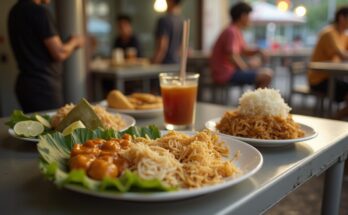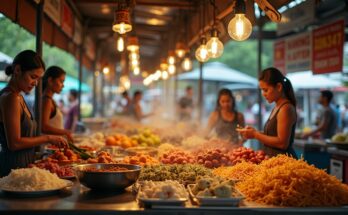
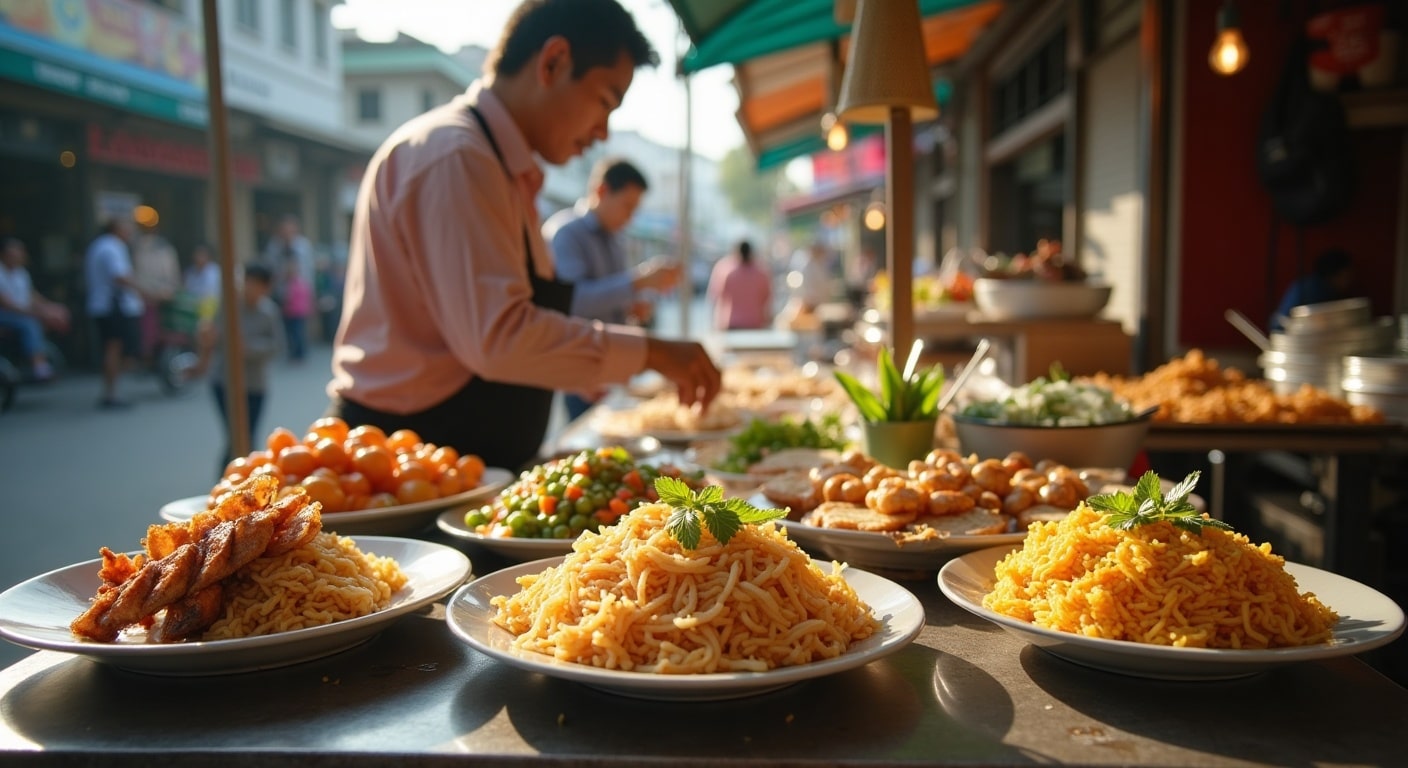
Street food Malaysia is one of the easiest ways to understand the country’s culture, flavours, and daily life. From smoky satay to iced cendol, local street food mixes Malay, Chinese, Indian, and regional influences into meals that are affordable, fast, and memorable.
For first-time visitors, the simplest approach is this: start with a few iconic dishes, learn where they are commonly sold, and know what to expect in terms of taste and spice level. This guide highlights 12 popular options and practical tips to help you order with confidence. If you want a broader overview of what to eat across the country, visit Malaysia Food Guide for First-Time Visitors.
Street Food Malaysia at a Glance
Street food Malaysia refers to inexpensive ready-to-eat dishes sold at hawker centres, roadside stalls, pasar malam night markets, coffee shops, and food courts. It is popular because it is convenient, flavourful, and often tied to local traditions.
Here is a quick summary of 12 must-try dishes:
- Nasi lemak
- Satay
- Char kway teow
- Roti canai
- Apam balik
- Lok lok
- Cendol
- Asam laksa
- Keropok lekor
- Popiah
- Ramly burger
- Otak-otak
Example: A visitor spending one evening at a Kuala Lumpur night market can easily try nasi lemak, satay, apam balik, and cendol in a single visit without spending much. If you are planning a low-cost food-focused trip, this pairs well with ideas from budget travel in Malaysia.
Where to Find Street Food in Malaysia
The best places to find popular local dishes are:
- Hawker centres: common in cities like Penang and Kuala Lumpur, with many stalls in one place
- Pasar malam: night markets that rotate by neighbourhood and offer snacks, drinks, and takeaway meals
- Mamak stalls: casual eateries known for roti canai, teh tarik, and late-night dining
- Roadside stalls: ideal for satay, burgers, grilled seafood, or regional specialties
- Ramadan bazaars: seasonal food markets with a wide variety of Malay dishes
Malaysia-specific tip: In Penang, hawker culture is especially strong, while in Terengganu and Kelantan, east coast snacks like keropok lekor are easier to find. In Kuala Lumpur, many visitors combine a food hunt with a short city break, especially after reading ideas for a weekend getaway in KL.
12 Popular Street Food Dishes You Should Try
1. Nasi Lemak
Nasi lemak is coconut rice served with sambal, anchovies, peanuts, cucumber, and usually a boiled egg. Many stalls also add fried chicken, rendang, or sambal sotong.
Why try it: It is widely seen as Malaysia’s national dish and a common breakfast choice.
2. Satay
Satay is skewered grilled meat, usually chicken or beef, served with peanut sauce, rice cakes, cucumber, and onion.
What to expect: smoky flavour, slightly sweet marinade, and rich nutty dip.
3. Char Kway Teow
This stir-fried flat noodle dish usually includes prawns, egg, bean sprouts, and soy sauce. Penang-style versions are especially famous.
Comparison: It is richer and smokier than many basic fried noodle dishes due to the high-heat wok technique.
4. Roti Canai
Roti canai is a flaky flatbread served with dhal or curry. Some versions include egg, sardine, banana, or cheese.
Practical tip: Order “roti canai kosong” for the plain version if you are unsure where to start.
5. Apam Balik
Apam balik is a folded pancake filled with sugar, crushed peanuts, and often sweet corn. Some versions are thick and fluffy, while others are thin and crispy.
6. Lok Lok
Lok lok is a skewer-based street food where you choose ingredients such as fish balls, vegetables, tofu, or meats, then boil or fry them and dip them into sauces.
Scenario: This is ideal if you are in a group with different preferences, because everyone can pick their own skewers.
7. Cendol
Cendol is a dessert made with shaved ice, coconut milk, palm sugar syrup, and green rice flour jelly. Some stalls add red beans or sticky rice.
Why it works in Malaysia: The cold, sweet mix is especially refreshing in humid afternoon weather.
8. Asam Laksa
Asam laksa is a sour, spicy noodle soup with a fish-based broth, tamarind, herbs, and vegetables. Penang is the most famous place to try it.
9. Keropok Lekor
Keropok lekor is a fish sausage snack from the east coast, usually deep-fried and served with chilli sauce.
10. Popiah
Popiah is a fresh spring roll filled with vegetables, turnip, egg, and sauce, wrapped in a soft thin skin.
11. Ramly Burger
The Ramly burger is a Malaysian street burger often wrapped in egg and topped with sauces. It is popular at roadside stalls and night markets.
12. Otak-Otak
Otak-otak is seasoned fish paste wrapped in banana leaf and grilled. The texture is soft, and the flavour can range from mild to spicy depending on the region.
Best Street Foods for First-Time Visitors
If you are new to Malaysian food, start with dishes that are easy to recognise and widely available.
- Nasi lemak for a classic local meal
- Satay for a simple grilled option
- Roti canai for breakfast or supper
- Char kway teow for a rich noodle dish
- Cendol for dessert in hot weather
Example: A cautious eater who prefers familiar textures may enjoy satay and roti canai first before moving on to stronger flavours like asam laksa or otak-otak.
If you are exploring beyond the capital, these dishes become part of the travel experience itself. Many food lovers plan routes around hawker spots and regional specialties while visiting top places in Malaysia.
How to Order Street Food Like a Beginner
Ordering street food in Malaysia is usually straightforward, but a few local habits help.
- Look for stalls with steady customer turnover
- Bring small cash notes, especially at night markets
- Ask whether a dish is spicy if you are sensitive to heat
- Check whether portions are for one person or sharing
- Observe what locals are ordering if the menu is unclear
Practical example: If you see long lines at a char kway teow stall in Penang, that often signals strong local trust in the flavour and consistency. For satay, ordering by stick count is common, so confirm the number before the vendor grills them.
Street Food Etiquette and Safety Tips
Most street food experiences are safe and enjoyable, especially at busy stalls. Still, common-sense choices matter.
- Choose stalls where food is freshly cooked
- Avoid items left exposed for too long under the sun
- Use bottled or filtered water if you are unsure
- Carry tissues or wet wipes, especially at open-air markets
- Start with moderate spice levels if you are not used to sambal
Malaysia-specific insight: Night markets usually become busiest after sunset, when temperatures are cooler and more food is cooked to order. This can be a better time to try grilled items like satay or otak-otak.
Regional Differences in Malaysian Street Food
Street food varies across Malaysia, so the same dish may taste different by state.
- Penang: known for char kway teow, asam laksa, and strong hawker culture
- Kuala Lumpur: broad mix of Malay, Chinese, and Indian street food, plus Ramly burgers and pasar malam variety
- Melaka: known for Peranakan influence and snacks with sweet-savoury balance
- Terengganu and Kelantan: famous for keropok lekor and east coast fish-based snacks
- Johor: offers grilled seafood and southern variations of familiar dishes
Comparison: Penang is often the top stop for hawker purists, while Kuala Lumpur is better for variety and convenience in one city.
FAQ
What is the most popular street food in Malaysia?
Nasi lemak is often considered the most popular street food in Malaysia because it is widely available, affordable, and closely tied to local identity.
Is Malaysian street food spicy?
Some dishes are spicy, but not all. Satay, roti canai, and popiah are usually easier for beginners, while sambal-heavy dishes and asam laksa may be stronger.
Where should first-time tourists try street food in Malaysia?
Start with hawker centres, pasar malam night markets, or busy mamak stalls in cities like Kuala Lumpur and Penang.
Is street food in Malaysia expensive?
No, it is generally affordable. Prices vary by city and tourist area, but many dishes remain budget-friendly compared with restaurant meals.
What time is best for street food in Malaysia?
Evenings are often best, especially for night markets and grilled foods. Breakfast is also a good time for nasi lemak and roti canai.
Conclusion
Street food Malaysia offers more than quick meals. It gives first-time visitors a practical, affordable way to taste the country’s diversity through 12 iconic dishes, from nasi lemak and satay to cendol and keropok lekor. Start with beginner-friendly favourites, visit busy local stalls, and explore regional variations whenever possible.
For a bigger picture of what to eat across the country, continue with Malaysia Food Guide for First-Time Visitors. It is a useful next step if you want to build a full Malaysia food list beyond street food alone.